Impostor Syndrome
The following materials come from Dr. Suzanne Lye’s event “Impostor Syndrome and How to Handle It,” on October 7, 2025.
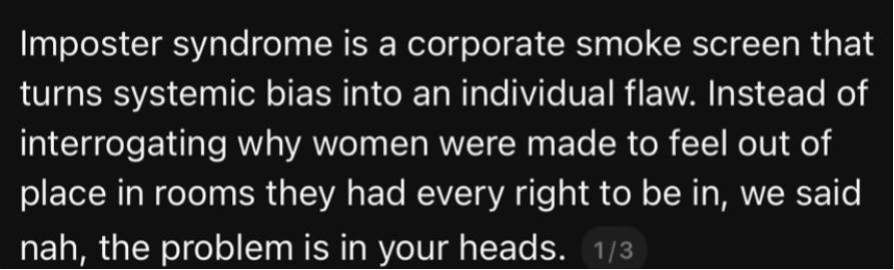
Definitions, Outcomes, and Origins of Impostor Syndrome
What is impostor syndrome?
Feeling like a fraud
Being mired in self-doubt
Who suffers from it?
People of all ages, places, and career stages
What is the result of impostor syndrome?
Feelings of inadequacy
Disconnection from self/others
Self-Sabotage
Where does impostor syndrome come from?
Self: maybe even the same overactive mind that makes you successful at academia (i.e., internal sources).
Others: expectations of family, friends, colleagues, administration, society (i.e., external sources).
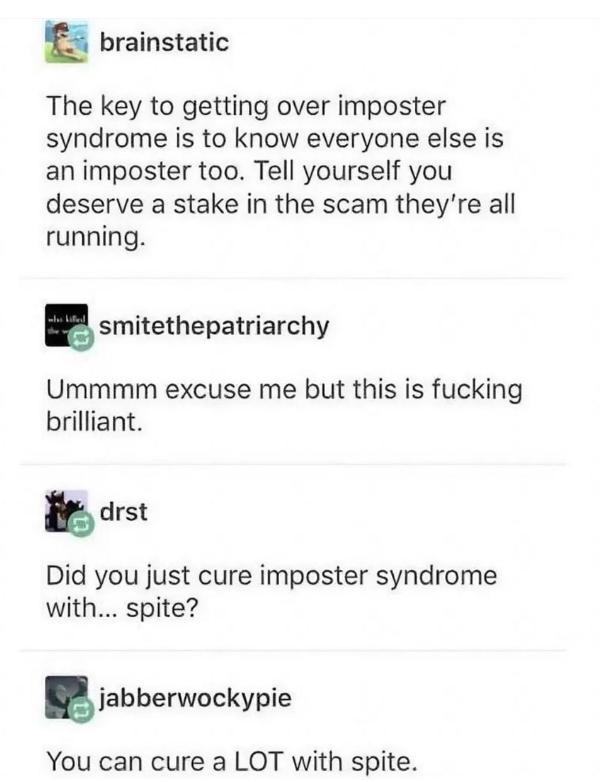

Five Types of Impostor Syndrome
Source: Dr. Valerie Young

The Perfectionist - Perfectionistic traits make you believe that you're not as good as others might think you are.
The Expert - Because there is more for them to learn, you don't feel as if you've reached the rank of "expert."
The Natural Genius - If you don't get something right the first time around or it takes you longer to master a skill, you feel like an impostor.
The Soloist - Since you couldn't get there on your own, you question your competence or abilities.
The Superperson - You believe you must be the hardest worker or reach the highest levels of achievement possible and, if you don't, you are a fraud.
Techniques for Resilience
Identify reality vs. feelings. Then reframe or shift perspectives as needed.
Reframe: change how you think about the feelings. Can you reframe nervousness as excitement, e.g., or call impostor syndrome your “secret agent” syndrome because it makes you so keenly aware of things?
Perspective change: shift the goals around impostor syndrome. Focus on muting rather than eliminating the negative voices.
Think: what is my end goal? Then consider response choices: retreat/regroup OR push through. Either way, reflect and plan.
Create an action plan. E.g., create a biobibliography for an idol, then acknowledge your own strengths and plan how to attain some of the accomplishments you admire.
Channel: imitate desirable aspects of your own mentors or idols.
Be ok with a little discomfort. Sometimes it can be helpful to do hard things! Sign up for specific events to work on a particular area that you find difficult.
Seek comfort. Create a “care protocol” when impostor syndrome flares up. Ideas include:
Engaging in a comforting activity.
Creating a forward-thinking plan for next steps.
Creating an energy map: Which activities give you energy? Which activities drain your energy? Plan accordingly, whether you’re thinking about a type of activity (exercising, teaching, etc.) or a stretch of time, such as an upcoming conference, semester, or summer break. (You can see Dr. Lye explain the practice in greater detail in minutes 21:20-24:45 of this video (see below).